Friday, March 22, 2019


Wednesday, February 20, 2019
Gran Canaria Giant Lizard (Gallotia stehlini)


 Philip🦎@EcotrakNI @EcotrakNI
 A bit of holiday herping at Meloneras #GranCanaria produced lots of sightings of the Gran Canaria Giant Lizard (Gallotia stehlini) - up to 80cm long.
Sunday, February 10, 2019
Charges recommended against Reptile Guy
News
Charges recommended against Reptile Guy
by Kevin Mills - Mission City Record
posted Jan 14, 2016
The BCSPCA has recommended animal cruelty charges against Mission’s The Reptile Guy Rescue and Education Centre, owned by Mike Hopcraft.
Marcie Moriarty, chief prevention and enforcement officer for the BCSPCA, confirmed the recommendation this week and said more charges may be sought.
“In virtually any case where we do seize animals, our role as the investigation agency is to prepare a report to Crown counsel. We have done that.” she explained.
The charges are being recommended under the Prevention of Cruelty to Animals Act.
While one set of recommendations has already been presented, a second set will go in shortly. Moriarty said it could take several months before hearing back from Crown counsel.
Court documents – the search warrant and information to obtain a search warrant – were made public by an animal activist group and state that in June 2015, the SPCA received a complaint from an ex-employee at the reptile centre, including photographs of animals in distress.
The documents list a series of concerns following several inspections. The allegations include animals enclosed in unsanitary conditions, dead animals, underweight animals, animals without water, a fungal infection, overcrowding and animals in critical distress.
Other concerns included small enclosures, inappropriate lighting and heating, and exposed wiring.
According to the documentation, a mountain horned dragon was found dead, with its eyes eaten out by crickets.
Two bearded dragons were seized, “one was found to be emaciated and had four broken legs,” according to the court documents.
The dragon was euthanized. The second dragon was also emaciated, according to the allegations.
Moriarty said the BCSPCA is currently working with Hopcraft.
“There were some outstanding orders with respect to animals in his care and he has had a veterinarian out to examine the animals and he’s complying with the veterinarian’s recommendations.”
She added that unless the BCSPCA receives additional concerns, they will just be following up to ensure that animals are not in distress.
“Our role is to ensure, whether you are an individual or a business, whether you own a cat or an iguana, it is receiving care and remaining free from distress as the law requires.”
Hopcraft is declining to talk to the media.
But on his Facebook page he said he wanted to clear up some of the allegations.
On the claim there was a bearded dragon with four broken legs, Hopcraft wrote, “To my and my staff’s knowledge, there was no such bearded dragon and we are not sure where that information is coming from.”
He added there is a “huge difference between broken limbs and limbs affected by metabolic bone disease,” saying a vet may diagnose it as fractures depending on the severity of the condition.
As for the overcrowding concerns, Hopcraft said there is a “double standard.”
He wrote, “Are some of my animals over crowded and being kept in enclosures that are too small? For a long term situation, yes.
“Our isolation snakes are kept in smaller enclosures as they are not here long term. This is the same as the SPCA keeping adult cats in 2x2x2 cages or dogs in 6-8 foot cages. Is it ideal? No, but it is what is necessary in order to take in the animals and find them new homes.”
He also addresses more concerns in his post.
Two-Headed Boa Constrictor

Two-Headed Boa Constrictor
diagonalviewPublished: June 13, 2016
Two-Headed Boa Constrictor
Link: https://rumble.com/v30qaw-two-headed-boa-constrictor.html
Newborn Boa Constrictor Still In Amniotic Sac
Incredible Footage Shows Newborn Boa Constrictor Still In Amniotic Sac
[source: https://buff.ly/2SmuOPm ]
Link:
https://youtu.be/Y3iz3eEwvzg
Life
is so amazing! This is a boa constrictor still in its amniotic sac that
has just been born. Little guy hasn't even had its first breath yet. So
amazing to witness!
It might be strange to see a snake in a sack, rather than a soft-shell egg, like we are used to seeing them. But according to a page on Wikipedia, both reptiles (this includes snakes) and mammals are members of the clade "Amniotes", meaning that these animals possess amniotic sacs. They may also further protect the fetus with a shell, but this is not necessarily the case for all amniotes and many species have gained and then lost shells as they evolved.
Chickens also have amniotic sacs in their eggs. There is an incredibly thin membrane between the shell and the egg white, which is technically the amniotic sac.
Despite the ominous part of their name, boa constrictors are actually quite frequently kept as domestic pets. The give birth to live young, where the mother bite through the sac to release the young. Boas are among the 30% of snakes that do give birth to their young, as opposed to pythons, which are classified as being ovoviviparous, meaning that their eggs emerge inside of the body.
It might be strange to see a snake in a sack, rather than a soft-shell egg, like we are used to seeing them. But according to a page on Wikipedia, both reptiles (this includes snakes) and mammals are members of the clade "Amniotes", meaning that these animals possess amniotic sacs. They may also further protect the fetus with a shell, but this is not necessarily the case for all amniotes and many species have gained and then lost shells as they evolved.
Chickens also have amniotic sacs in their eggs. There is an incredibly thin membrane between the shell and the egg white, which is technically the amniotic sac.
Despite the ominous part of their name, boa constrictors are actually quite frequently kept as domestic pets. The give birth to live young, where the mother bite through the sac to release the young. Boas are among the 30% of snakes that do give birth to their young, as opposed to pythons, which are classified as being ovoviviparous, meaning that their eggs emerge inside of the body.
Boa
mothers carry their young for between 100 and 150 days. Boa litters
typically account about 25 baby boa constrictors, but can be as low as
10 snakes to an incredible count of 64.
Source: https://rumble.com/v5d495-just-born-boa-constrictor.html
Friday, February 8, 2019
Chlcken of the Trees - Common Green Iguana

Common Name: Green Iguana
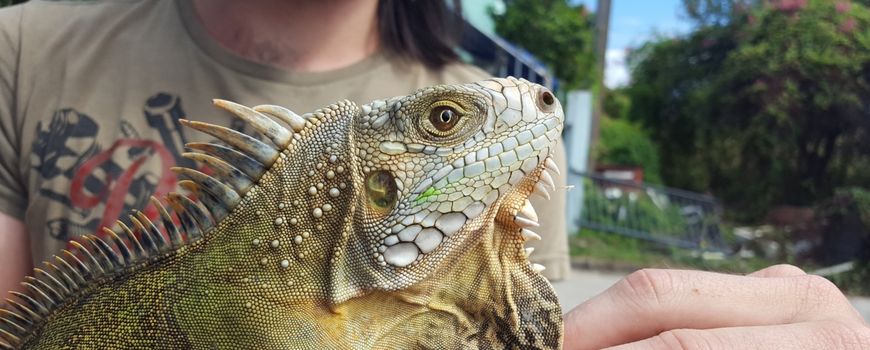
Green iguanas have strong jaws with razor-sharp teeth and powerfull tails.
Fast Facts
- Description
- Arboreal; earthy green lizard with transverse bands on the body
and tail; short, powerful limbs; sharp claws; long, strong tail; large
flap of skin (dewlap) that hangs from throat and helps to regulate
temperature; prominent crest of soft spines along the middle of the neck
and back, beginning at base of the skull
Male: Males typically have brighter overall coloration than females - Size
- Male: 120-195 cm (4-6.5 ft) as adults
Female: Slightly smaller than males - Weight
- 4.5-6.75 kg (10-15 lb.)
- Diet
- Omnivorous as young but adults are almost exclusively herbivores; fruits, flowers, leaves; insects and snails opportunistically; young iguanas eat more insects and shift to 95% vegetation as they age
- Incubation
- 60-85 days
Clutch Size: 10-50 eggs - Sexual Maturity
- 2 years; males sometimes longer (need longer period of growth in order to be large enough to compete for females)
- Life Span
- 15 years
- Range
- No data
- Habitat
- Tree dweller in tropics; trees/bushes close to water in tropical rainforests; prefers temperatures in the upper 90s (Farenheit)
- Population
- Global: No data
- Status
- IUCN: No data
CITES: Not listed
USFWS: Not listed
Fun Facts
- Iguanas are able to hold their breath for up to 30 minutes.
- They will often jump from tree to water using their powerful tail for swimming to escape. They are also able to leap down 40-50 feet without injury.
- To attract a mate, mature males may turn orange during breeding season.
- Iguanas store large amounts of fat in their lower jaw and neck area in order to survive times of famine. The pouch at the base of their neck is called a dewlap, and is used in display.
- Their tail has weakened vertebrae so the iguana can break free and escape if caught by the tail. Iguanas are also able to whip their tail in defense, leaving behind a stinging welt or worse.
Ecology and Conservation
Iguana meat is a valuable source of protein; theoretically, farming iguanas could yield more meat per acre than cattle, while requiring only 70% of what a chicken consumes. With the loss of habitat due to deforestation, iguana farming research is on the rise.Iguana eggs are also considered a delicacy in the tropics, coining the term "chicken of the tree."
Although not listed as endangered or threatened, populations are under pressure from both habitat destruction and their popularity in the pet trade.
Bibliography
Although not listed as endangered or threatened, populations are under pressure from both habitat destruction and their popularity in the pet trade.Burghardt, Gordon M., and Rand, Stanley A. Iguanas of the World. New Jersey: Noyes Publications, 1982.
Burghardt, Gordon M., and Rand, Stanley A. Iguanas of the World. New Jersey: Noyes Publications, 1982.
Burghardt, Gordon M., and Rand, Stanley A. Iguanas of the World. New Jersey: Noyes Publications, 1982.
Halliday, Tim R., and Adler, Kraig. The Encyclopedia of Reptiles and Amphibians. New York: Equinox Books, 1986.
Roberts, Mervin and Martha D. Roberts. All About Iguanas. T.F.H. Publications, Inc., New Jersey. 1976.
Link: https://seaworld.org/animals/facts/reptiles/green-iguana/
Sunday, January 27, 2019
Frozen iguanas fall out of trees in Florida
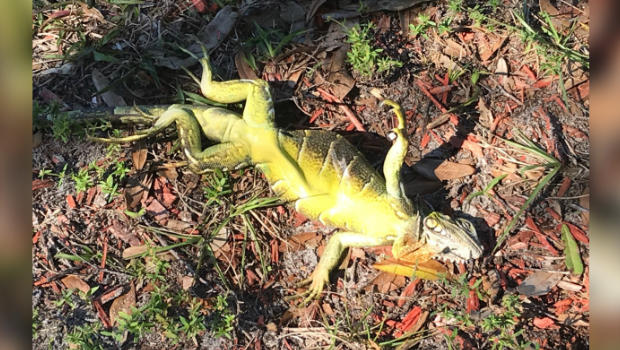
The cold is causing frozen iguanas to fall from trees in Florida
http://cnn.it/2Ec1Ypk
January 5, 2018


(CNN)There's an iguanocalypse in Florida, or at least that's what it looks like judging from the photos worried Floridians are posting all over social media.
Because of the cold temperatures sweeping the nation, iguanas are dropping out of trees like overripe mangoes, littering the ground in an apparent state of rigor mortis.
One tiny detail, though: They're probably not dead. They are, however, literally frozen.
Emily Maple, the reptile keeper at the Palm Beach County Zoo, told CNN affiliate WPEC the cold-blooded animals get "cold stunned" -- that is, they basically freeze -- if the temperature gets below 45 degrees Fahrenheit.
"If it's just for a day or two they'll just get to where they're completely frozen in time. They're still able to breathe. They're still able to do bodily functions just very slow," said Maple.
See, at first you probably felt sorry for them, didn't you? But what they're doing is kind of aspirational: When things start to go sideways, literally shut down your body, freak some stranger out by keeling over near their pool, and wait it out in a state of suspended animation. Just, you know. don't actually die.
The iguanas aren't the only ones noping out of the cold weather.
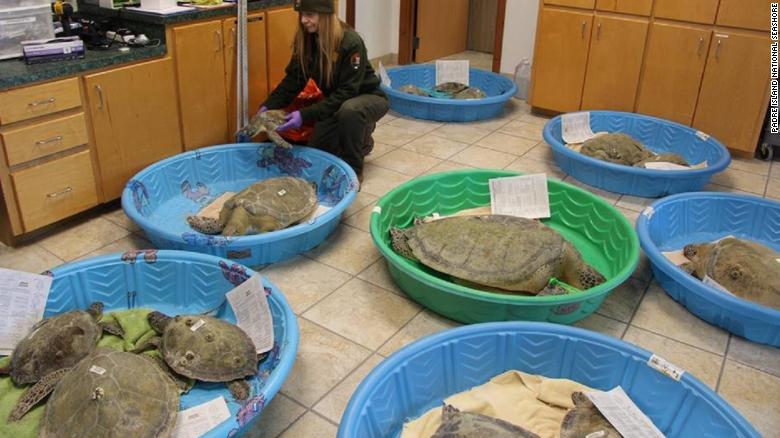
Sea turtles near the Padre Island National Seashore near Corpus Christi, Texas, had to be brought inside to avoid what the National Park Service is calling a "sea turtle cold stunning event due to extremely low temperatures."
Link: http://cnn.it/2Ec1Ypk
Saturday, January 26, 2019


Iguanas reintroduced to Galapagos island after 200 years
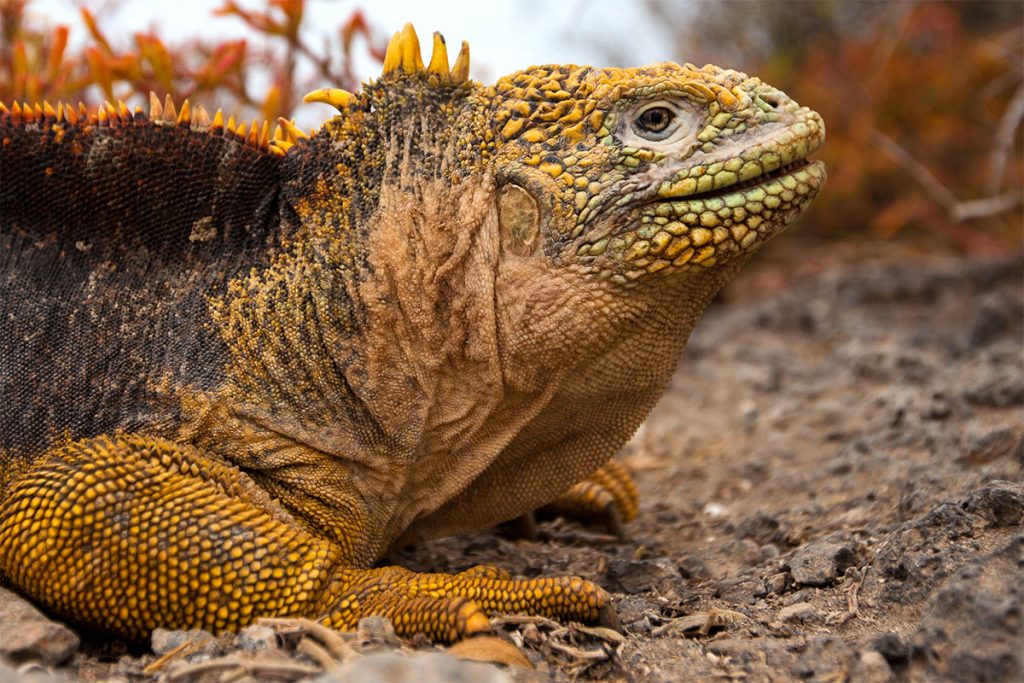
Iguanas reintroduced to Galapagos island after 200 years
Emily Dixon, CNN • Updated 8th January 2019
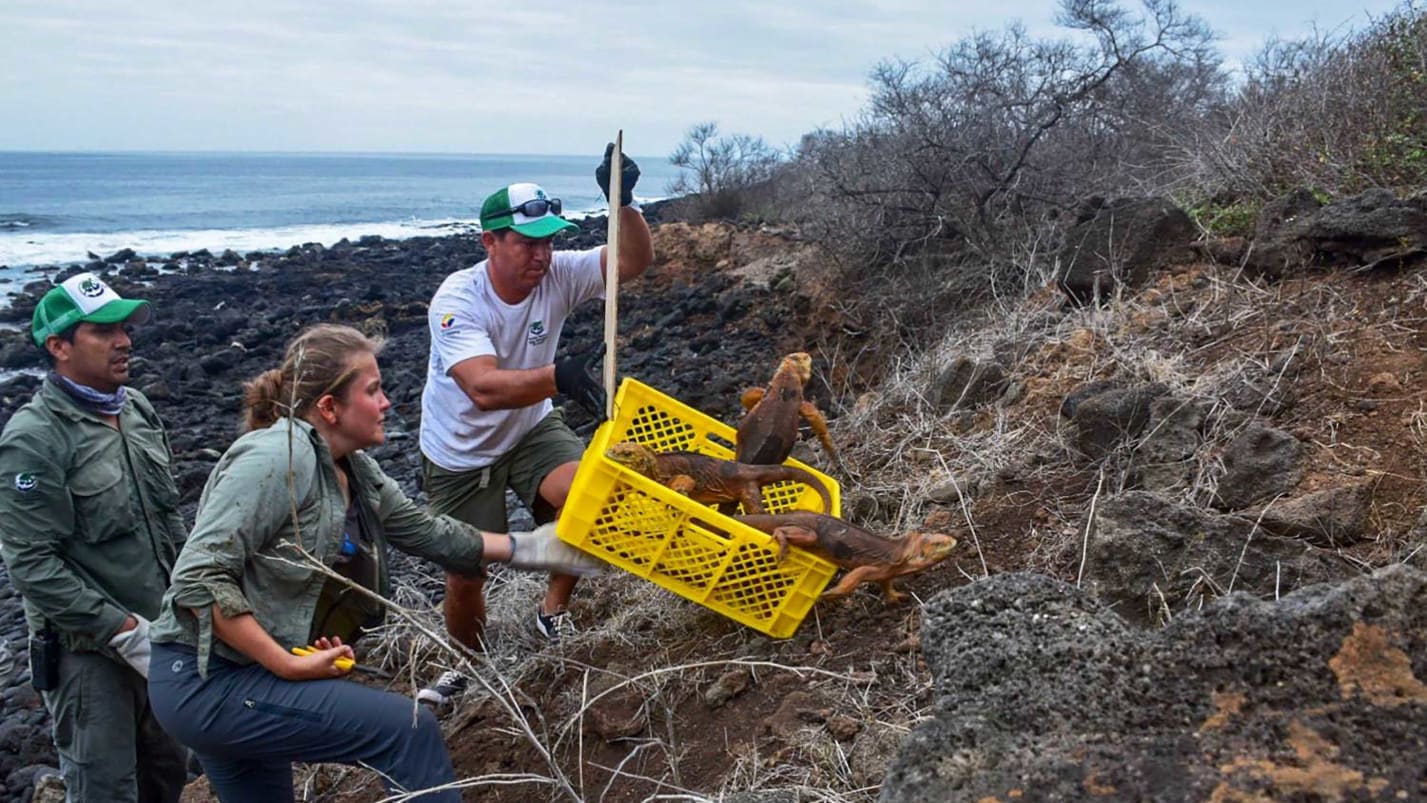
Un gran noticia para #Galápagos, para el #Ecuador y el mundo.
Gracias a nuestros aliados estratégicos @NoExtinctions#AcciónGuardaparque
Parque Galápagos
✔
@parquegalapagos
[BOLETÍN] Iguanas terrestres ayudarán a la restauración ecológica de la isla Santiago.
Leer más http://ow.ly/3R1g30ndQID
Leer más http://ow.ly/3R1g30ndQID
(CNN) — The
last person to officially record seeing a land iguana on Santiago
Island in the Galapagos was Charles Darwin in 1835. After that, iguanas
were erased from the island, wiped out by invasive predators like the
feral pig.
But now, 184 years later, the lizards have made a return, thanks to an initiative by the Galapagos National Park authority.
More than 1,400 land iguanas, scientific name Conolophus subcristatus,
were taken from the neighboring North Seymour Island and released on
Santiago Island between January 3 and 4.
They were introduced to the
coastal regions Puerto Nuevo and Bucanero, authorities said in a
statement, which have ecosystems that closely mimic their former home.
On Twitter, Galápagos National Park Director Jorge Carrión called the reintroduction of the iguanas "great news for #Galápagos, for #Ecuador and the world."
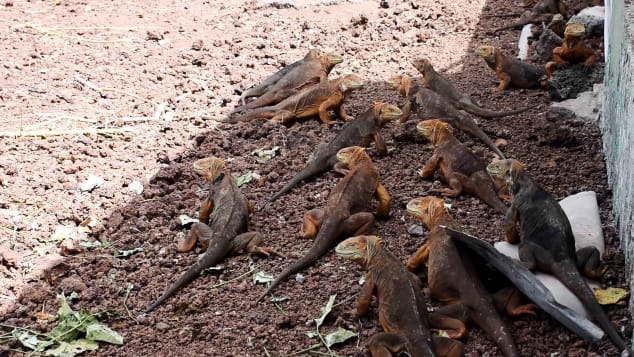
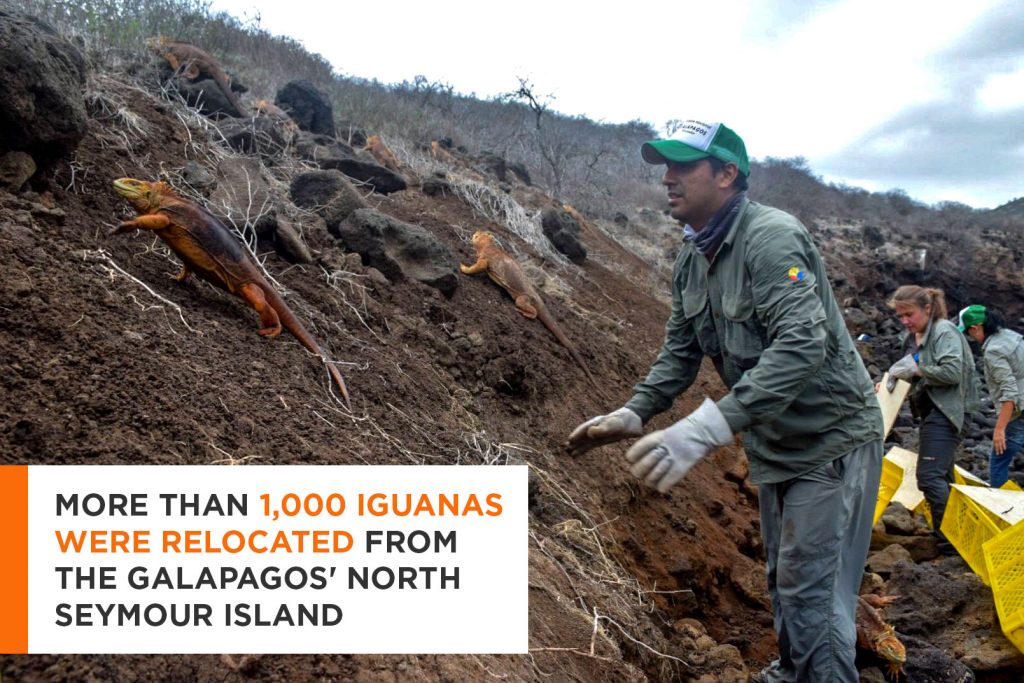
More than 1,000 iguanas were relocated from the Galapagos' North Seymour Island by the national park authority.
Facebook/parquegalapagos
According to the Galapagos Conservation Trust, the land iguana population of the archipelago suffered a significant decline
after the introduction of species like cats, rats and dogs, as well as
the predatory feral pig. These species prey on young iguanas and eggs --
though some cats have targeted adult iguanas up to four years old, says
the trust -- and also compete with the lizards for food.
The
reintroduction initiative, carried out alongside New Zealand's Massey
University, was developed in response to the depletion of vegetation
like the cactus on North Seymour Island, threatening the some 5,000
iguanas' food source.
Some
iguanas have remained on North Seymour Island to avoid compromising its
existing vegetation. Galapagos ecosystems director Danny Rueda
explained: "The land iguana is a herbivore that helps ecosystems by
dispersing seeds and maintaining open areas free from vegetation."
Authorities
will continue to monitor the Santiago Island iguanas, determining
whether they're creating nests and finding sufficient food. They'll also
keep a close eye on newer species like rodents and ants to prevent them
disturbing the iguanas' nests.
Threatened Galápagos Land Iguanas Return to Santiago Island En-Masse After 180-Year Absence
Reintroduction of Galápagos Land Iguanas helps restore Santiago Island’s ecological health and protect this important population.
Press Release, 8 January 2019Contact: Sally Esposito, Island Conservation, Director of Marketing & Communications, +1 706-969-2783, sally.esposito@islandconservation.org
Resources: photos, interviews
Karl Campbell, Island Conservation’s South America Regional Director stated:
This is the largest iguana population ever translocated for a reintroduction and sees critical ecosystem processes like seed dispersal reinitiated for the first time in 180 years.”
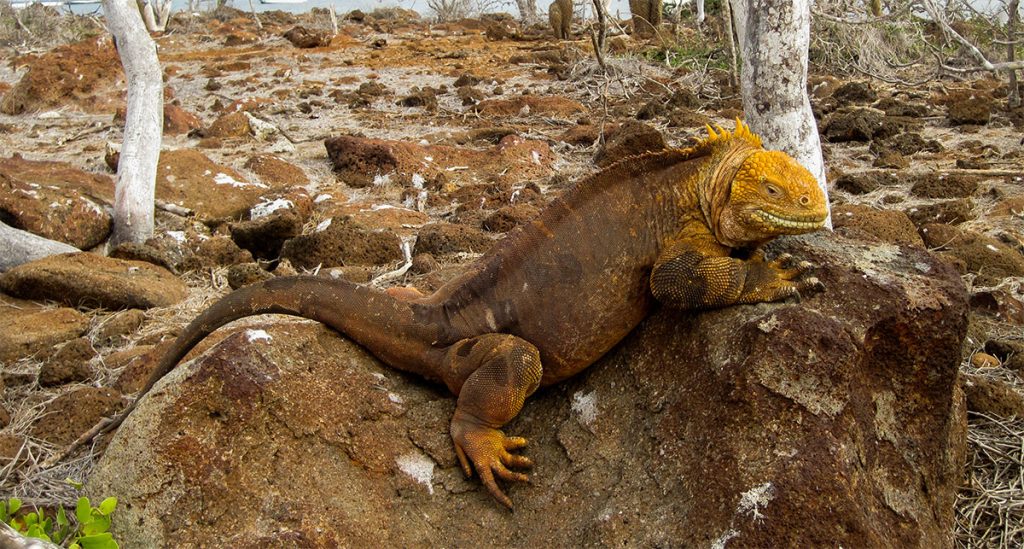
Charles Darwin was the second-last person to record land iguanas alive on Santiago Island in 1835, with Abel du Petit-Thouars being the last in 1838. Introduced feral pigs wiped out the land iguana population. When the California Academy of Sciences visited in 1903 they found only skeletal remains.
Santiago Island (58,465 ha / 144,470 acres) was freed of feral pigs in 2000, and feral goats and donkeys in 2005.
Santiago Island is the largest island worldwide to be freed of feral pigs, goats and donkeys, setting the stage for the next phase of island restoration activities like returning locally extinct species.
Other large scale restoration efforts are planned for other islands in the Galápagos. Funding contingent, in 2020 invasive predators will be eradicated from Floreana Island, protecting 55 endangered species and allowing for the reintroduction of 13 locally extinct species, including the Endangered Floreana Mockingbird and Floreana Giant Tortoise.

- Press Release: Ecological Restoration of North Seymour Island Underway Thanks to Rat Removal - January 24, 2019
- BBC Wildlife Features the Release of Galápagos Land Iguanas On Santiago Island - January 11, 2019
- We Must Act Now: Threat from Seabird Eating Mice Continues to Evolve - January 10, 2019
- Threatened Galápagos Land Iguanas Return to Santiago Island En-Masse After 180-Year Absence - January 8, 2019
- Novelist Jonathan Franzen Highlights Island Conservation in Sierra Club Interview - January 7, 2019
- Santa Cruz Sentinel: Island Conservation and Preventing Extinctions - January 4, 2019
- IUCN: Do non-native species count as biodiversity? - December 18, 2018
- A Message of Hope for Endangered Island Wildlife - December 11, 2018
- Press Release: Historic Project to Protect Palau’s Iconic Species Declared Successful - December 11, 2018
- Island Conservation’s Board Resolution for the Genetic Biocontrol of Invasive Rodents Partnership - December 6, 2018
Popular Authors




Island Conservation
Jorge Carrión Tacuri
@JcarrionTacuri
Director Parque
Nacional Galápagos, el desarrollo armónico entre sociedad y naturaleza
es posible, aprovechando de forma racional los recursos de Galápagos.
Parque Nacional Galápagos
Joined August 2015
Subscribe to:
Posts (Atom)