Tuesday, June 27, 2017


Monday, June 26, 2017
Dragons on the beach
Posted November 13, 20166 Comments on Dragons on the beach Animal behaviour
Dragons on the beach
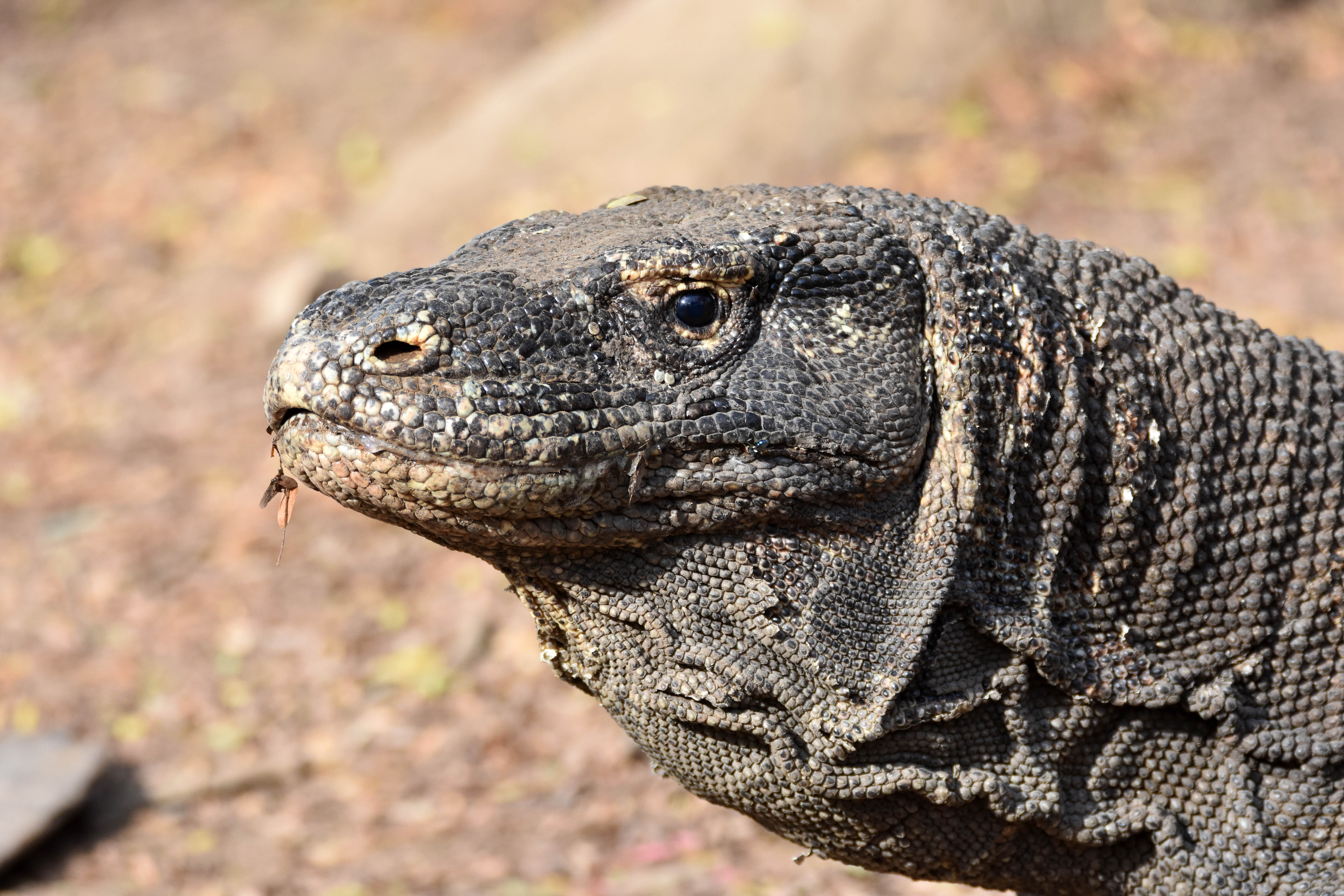 Komodo dragon (Varanus komodoensis) on Komodo Island
 There’s not an awful lot to say about Komodo dragons, other than the fact that they are a huge lizard – the biggest in the world – and give us an indication of the reptilian megafauna that once stalked the earth.
 Komodo dragon (Varanus komodoensis) on Komodo Island approaching a water hole
 They are not creatures I think anyone could find attractive. Respect, admiration and awe, but not affection. They are just too reptilian, too unknowable. What is going on in that tiny brain when it looks at us. Just the notion, I think, that we are edible!
 Komodo dragon (Varanus komodoensis) on Komodo
with forked tongue
I didn’t really like them, with their deer-chomping habits and slimy mouths, but they are magnificent animals and I am very glad to have had the opportunity to see them up close.
 Komodo dragon (Varanus komodoensis) drinking from water hole
 I must confess that they did have an air of dignity about them. When this large one approached the water hole to drink, we scattered, but he remained still, upright and alert (first photo) for some time before moving in for a drink. After all it was his water hole. Was he being cautious or dignified? Maybe a bit of both. He (or she) had probably been drinking there for decades whilst we were only spending a fleeting hour on the island.
 137 Komodo dragon (Varanus komodoensis) on beach with deformed foot
 The ones on the beach were said to have been fed occasionally, which is why they are very interested and attentive when zodiacs containing tourists arrive to gawp at them and take pictures.
 ‘Shooting’ dragons on the beach
  Komodo dragon (Varanus komodoensis) on beach
  Komodo dragons (Varanus komodoensis) on beach
  Komodo dragon with open mouth.
 The young ones, which spend most of their lives up trees to avoid being eaten by the larger ones, are almost cute. Until I saw one catch, kill and swallow a rat (below sequence).
 Young Komodo dragon hunting up a tree
  Young Komodo dragon with freshly killed rat in its mouth (Komodo Island)
  Young Komodo dragon swallowing a rat
 It stalked it up a tree and then fell to the earth with a thud. It then raced off to a quiet spot (not so quiet on account of the photographers following it with their cameras!) and proceeded to swallow it whole. They shan’t be on my Christmas list. But like them or loath them, they deserve respect; for surviving so long if nothing else!
 Baby Komodo dragon peering out of a hole up a palm tree.
  Young Komodo dragon resting on a log
 The poor animals which God, sorry evolution, has elected to be food for these giant lizards, are an attractive cervid called the Timor deer. It must be a rum existence never knowing when one of these lizards is going to inflict a venomous bite leaving you hobbling around waiting to be eaten. But perhaps only the weak and sickly get taken. This deer did not seem at all concerned about the presence of the dragons nearby.
 Timor deer or Sunba sambar (Rusa timorensis)
 All photographs taken in Komodo National Park in October 2016.
Source: https://rcannon992.com/2016/11/13/dragons-on-the-beach/
Dragons in the park
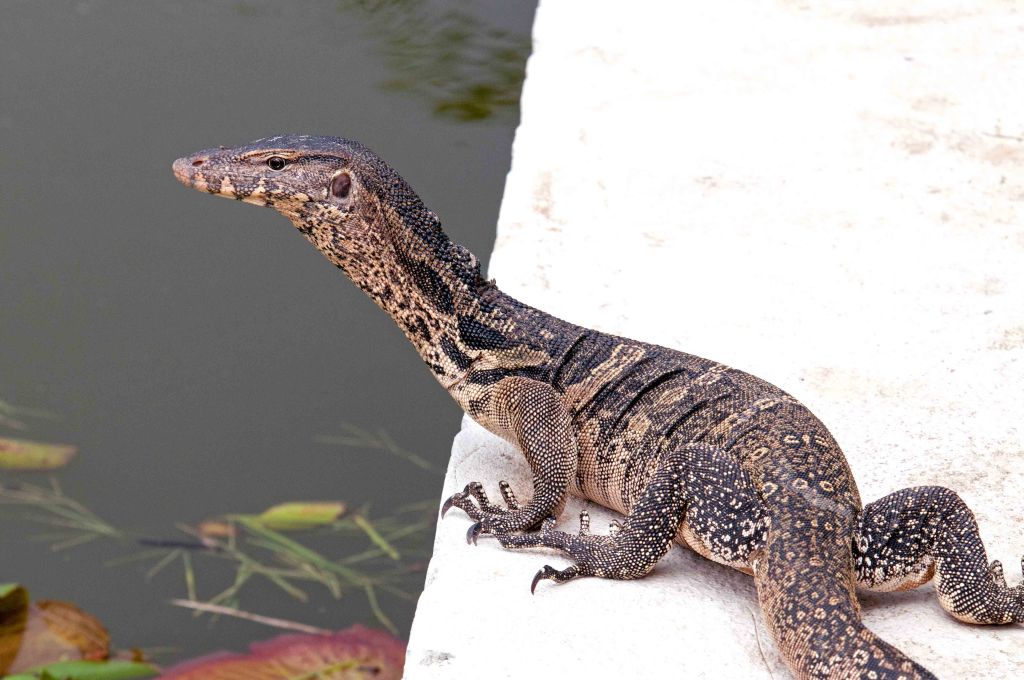
Southeast Asian water monitor (V. salvator macromaculatus), Lumpini Park, Bangkok

Categories
Good Blog
Friday, May 12, 2017
Thursday, April 20, 2017
Eastern Philosophy Quotes
"Journey of a thousand miles begins with a single step."
"You will not be punished for your anger; you will be punished by your anger."
— Buddhist Proverb
"The wise adapt themselves to circumstances, as water molds itself to the pitcher."
"The most precious gift we can offer others is our presence." — Thich Nhat Hanh

"The wise adapt themselves to circumstances, as water molds itself to the pitcher."
"The most precious gift we can offer others is our presence." — Thich Nhat Hanh


Wednesday, April 19, 2017
Savannah Monitor Lizard

Savannah Monitor Lizard

A starting point for the care of Savannah Monitors
One of the biggest misconceptions about Savannah Monitors is that they are desert dwelling animals; >This is false information Watch Video - Savanna BiomeVirtually all of the Savannah Monitors captured for the worldwide pet trade are "harvested" from Ghana Africa, a coastal grassland, that has rich grassy vegetation and relatively high humidity for much of the year. When we fail to provide the required humidity in captivity, these majestic animals perish from various states of dehydration. What many keepers fail to realize is that these animals spend much of their time down inside Burrows (or tunnels) under the ground to conserve moisture and avoid predators. These burrows are very important to the overall health of your lizard.
Savannah Monitors are very intelligent animals, they require stimulation, locked inside four walls with nothing to do is comparable to solitary confinement in prison, They NEED space, they NEED dirt to dig burrows in. Like a child in a sandbox, nothing else you can do for your animal is better than to give it plenty of sandy soil mix to tunnel in and providing enrichment to keep the animal's
mind keen. Monitors in captivity can become bored. (wouldn't you be in a box?)
If you wish to keep your Savannah Monitor healthy and alive for more than a year or two, you simply must provide a large sealed enclosure with a solid 24 inches of soil that will hold a burrow without collapsing on the animal while it spends most of it's time in there. The preferred substrate of many advanced keepers is a mixture of soil and sand. (See Bio Active soil page)

Temperatures and Humidity
To properly support your Savannah Monitor, a wide range of options is usually deemed the best way to raise a healthy animal, Quite honestly you simply cannot provide this with any size "fish tank"! Click here to see why this is the single most important factor of proper care.The humidity inside your enclosure should range from very low (directly under the basking lamps) to very high (nearly 100% down in the burrows and about 60% overall humidity on the cooler end of the cage.
A high quality digital hygrometer is mandatory for monitoring the environment inside your enclosure. Guessing the humidity will not work.

A high quality digital thermometer or temp gun is also a necessary tool required to properly set up and maintain your monitor and keep it healthy.


Failure to provide sufficient basking temperatures and correct humidity, as well as supported burrowing, is stressful the lizards internal organs and leads to dehydration and gout.
It has been concluded that chronic exposure to insufficient basking temeratures prohibits proper renal tubule function leading to kidney damage and failure over time. Source: Robert W. Mendyk, Zoo Biology 00: 1-11 (2012)

As a general rule of thumb, basking spots should be a minimum of 130 - 150 degrees Fahrenheit.
Recently I documented my lizards baskig at almost 180 degrees. View Photo (click).

Allowing your captive Monitor Lizard to roam about the house or keeping it in a room is not a suitable substitute for a proper enclosure.
Lighting your enclosure.
For optimal basking, without risk of burns, it is common practice to use a cluster of three smaller 45 to 50 watt halogen flood lights rather than one big light. Experienced keepers use common floodlight bulbs sold at most retailers / hardware stores for use in outdoor security lights. They cost a lot less than reptile bulbs sold at pet shops, and work just as well.
Optimal basking temperatures should be right around 130-155 degrees (F) and be broad enough to cover most of the lizards body while sprawled out under the lamps. Warning! the use of a single high wattage lamp will burn your lizard and dry out the air in your cage.
It is also of no harm and thought to benefit the lizard if there is at least one UVB lamp in use to enhance the simulation of sunlight.

Food options
Savannah Monitors are primarily insectivores in the wild, there is however, some controversy about feeding rodents in captivity. This is a long winded and foolish argument.A properly supported Monitor can handle mice and rats in their diet without any problems. However, the vast majority of keepers do not provide the correct housing for their captive lizards and the resulting health issues are often blamed on the rodent diet, when in fact improper husbandry that brought on the failure in the animal's health. Be sure to read the dehydration and gout page carefully, or your lizard will not live to be very old.
A proper Savannah Monitor diet would consist of Roaches, Crickets, Night Crawlers (Large earth worms) Mice, Rats, Snails, Garden slugs, Superworms and Locusts (where available) and certified chemical free organic whole Shrimp, Crabs, Crayfish & Chicks.
Poor foods
Some of the worst things people could ever feed their captive Savannah Monitors...- Dog food, Cat food, Canned anything! Why? Read this link
- Chicken parts, ground Turkey, animal parts.(Lacking essential minerals)
- Boiled or scrambled eggs & cooked foods.(Cooking destroys nutrients)
Failure to provide these basic requirements will result in your animal languishing and ultimately perishing from dehydration related complications or other health issues and dying a gruesome death.
Summary of a Properly supported Savannah Monitor
- Minimum cage size 8 feet x 4 feet x 4 feet or bigger
- Deep sandy soil floor to support digging burrows
- Hot basking area of 130 degrees (F) or HOTTER
- 60% average humidity or higher
- large water dish (Changed daily or more)
- several hiding areas located throughout the cage.
- 6500K and supplimental UV lighting, it should be well lighted during the daytime cycle to simulate a sunny afternoon in Africa.
Important Reading Materials
The links below lead to some great information regarding your Savannah Monitor and I highly recommend having a look
The annual Savannah Monitor tragedy
 Every
year, beginning in March, the reptile market becomes flooded with baby
Savannah Monitors. Thousands are imported from Africa and sold over the
internet, at pet shops and reptile shows for as little as $15 per
lizard.
Every
year, beginning in March, the reptile market becomes flooded with baby
Savannah Monitors. Thousands are imported from Africa and sold over the
internet, at pet shops and reptile shows for as little as $15 per
lizard.The irresponsible sellers of these baby animals are nearly all guilty of holding back the necessary information required to properly take care of these lizards. Because of this, almost every one of these babies fail to reach their first birthday.
After all, if the seller were to inform the buyers that the "cheap" lizard they were about to purchase was going to need a cage the size of a room with (literally) a ton of dirt in the bottom, it was going to eat several thousand dollars worth of food and may never become "dog tame" they would not sell very many of them. In our struggling economy; that is not going to be a popular move, so they often (nearly always) distort the truth and will tell you whatever you want to hear, just so they can collect your money. This is heartbreaking and tragic.
Source: http://www.savannahmonitor.co/
More info:
Source:
Subscribe to:
Posts (Atom)